
It doesn't.
Commercial renovations are expensive. Office fit-outs in major Canadian cities now run between CAD $181.10 and $204.45 per square foot, depending on the market. That's before you factor in lost revenue while the space sits closed.
Architectural finishes offer a different path. This guide breaks down what they are, why businesses are choosing them over demolition, and how a fabricator like ATD helps you get a polished, on-brand look without the construction headache.
Key Takeaways
- Architectural finishes transform walls, doors, and surfaces without demolition or downtime
- Film-based materials replicate wood, stone, and metal at a fraction of the cost
- Most installations wrap up in days, keeping your business open
- Franchises use finishes to standardize branding across every location
- A certified installer ensures proper adhesion and a long-lasting, bubble-free result
What Are Architectural Finishes?
An architectural finish is any exposed surface treatment applied to walls, ceilings, floors, columns, doors, windows, or furniture that blends how a space looks with how it performs. Think of it as the visible "skin" of a building or interior element.
Traditional Materials vs. Modern Film Finishes
For decades, architectural finishes meant real wood paneling, natural stone, or brushed metal. Each option was beautiful, costly, and dependent on skilled trades to install correctly.
Modern adhesive-backed architectural films changed that equation. Products like 3M's DI-NOC line are multilayer vinyl films, roughly 8 mils thick, engineered to replicate the exact texture and grain of premium materials. They're applied directly to existing surfaces rather than requiring new construction. This distinction matters most for multi-location businesses: re-cladding every accent wall in real stone or hardwood across several sites can mean months of disruption and a five-figure invoice at each location.

Where Finishes Show Up in Construction Documents
Architects and designers don't just pick finishes randomly. They document them in finish schedules, tabulated lists within construction drawings that specify materials, colours, and locations for every surface in a project. This keeps large builds consistent and gives contractors a clear reference point.
Manufacturers classify architectural films under CSI Division 09 (Finishes), the same category that governs paint, flooring, and wall coverings. So while the technology is modern, it fits into a well-established part of construction planning.
Finishes aren't purely decorative, either. They serve double duty:
- Adding privacy to glass partitions
- Improving insulation on certain substrates
- Protecting surfaces from daily wear
- Refreshing a brand's look in days, not months
Why Businesses Choose Architectural Finishes
The appeal comes down to five practical advantages that matter to any business owner watching the clock and the budget.
Cost and Speed
Real wood, stone, and metal come with material costs, specialized labour, and long lead times. Film-based finishes replicate those same looks using far less material and a fraction of the installation time. One hospital renovation project using DI-NOC finishes saved nearly $250,000 and shortened the project timeline compared to sourcing natural materials.
Installation typically happens in days, not weeks. There's no demolition dust, no jackhammering, and no need to shut your doors for an extended stretch.
Durability That Holds Up
High-traffic commercial spaces punish surfaces. 3M's testing shows DI-NOC finishes withstand 7,000 abrasion cycles under a Taber CS-17 wheel test with zero wear-through, backed by a 10-year interior limited warranty on most patterns. That's a lot of foot traffic, cart bumps, and daily cleaning before you'd see any breakdown.
Brand Consistency at Scale
Franchises and multi-location businesses can lock in the exact same colours, textures, and branded elements at every site. No more guessing whether the paint colour matches between your Toronto and Calgary locations.
Sustainability Built In
In the U.S. alone, demolition accounts for more than 90% of the 600 million tons of construction and demolition debris generated annually. Refinishing an existing surface instead of ripping it out and rebuilding avoids adding to that pile entirely.
Design Flexibility
Hundreds of patterns and textures exist across wood, stone, metal, and glass categories, giving nearly any industry a custom look without a custom price tag.

Types of Architectural Finishes and Where They're Used
Not all finishes serve the same purpose. Understanding the categories helps you match the right material to the right space.
Common Material Categories
- Wood-look finishes – Paneling or wood-grain films that add warmth to offices, hotels, and retail interiors
- Stone and metal finishes – Brick, stone, and brushed-metal textures for accent walls, counters, and columns
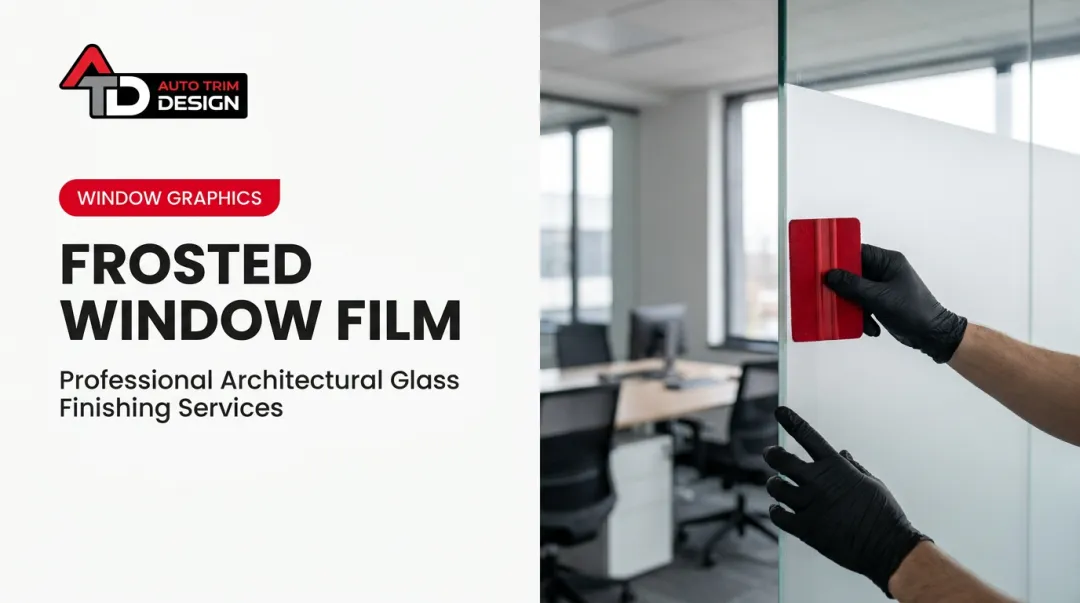
- Glass finishes – Frosted, tinted, or etched films for privacy partitions and storefront windows
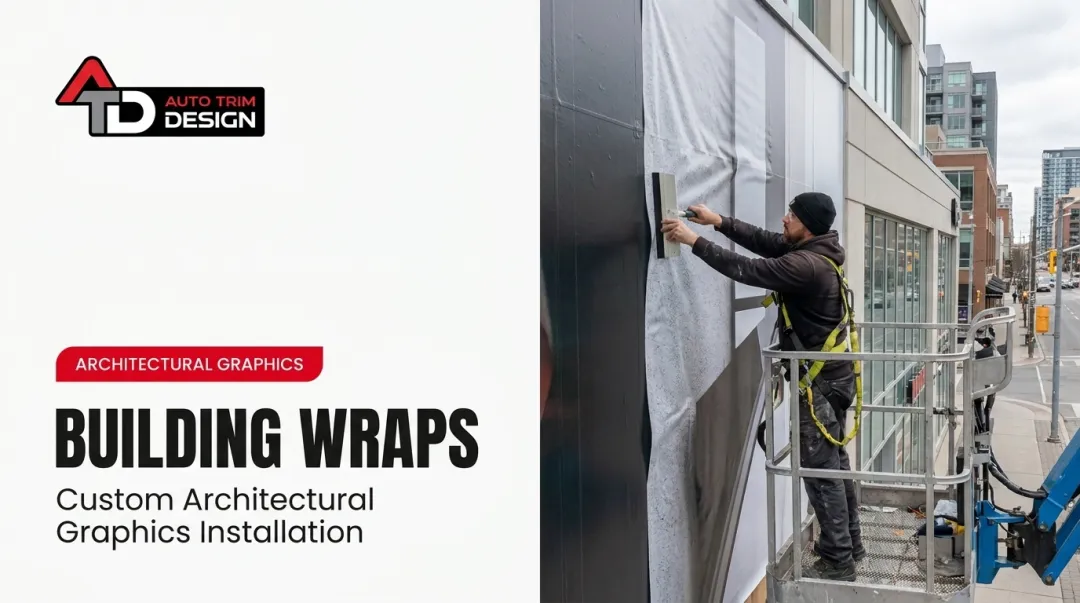
- Specialty and decorative films – Custom-printed graphics and branded patterns that double as marketing surfaces
Popular Applications by Space
Different industries lean on different finish types:
- Corporate offices and lobbies – Accent walls and reception desks that reinforce brand identity from the moment someone walks in
- Retail and hospitality – Storefronts, elevator interiors, and bar areas that create a strong first impression using stone- and wood-look finishes on entrance walls and elevator frames
- Healthcare and education – Durable, disinfectant-friendly wall and cabinet finishes suited for high-hygiene environments like corridors, patient rooms, and classrooms
Key Considerations Before Installing Architectural Finishes
A great-looking finish depends on more than picking a pattern. A few technical factors determine whether it lasts.
Surface compatibility matters most. Finishes adhere best to certain surface types, while others require extra prep work:
- Smooth, non-porous surfaces such as sealed drywall, metal, or high-pressure laminate hold film without extra treatment
- Textured brick or unsealed concrete typically needs primer and prep work first, sometimes two coats of sealer before a film holds properly
Professional installation isn't optional. Achieving a seamless, bubble-free result, especially on curved surfaces or large accent walls, requires trained hands. A misaligned seam or trapped air pocket is far more noticeable on a finish than on paint.
Lifespan depends on exposure. Interior finishes generally outlast anything installed outdoors or in direct sunlight. 3M's published performance data reflects that gap:
| Application | Expected Lifespan |
|---|---|
| Indoor vertical surfaces | ~12 years |
| Outdoor/exterior surfaces | 7–16 years (varies by climate and pattern) |
Why Partner with ATD for Your Architectural Finishes Project
Choosing the right installer matters just as much as choosing the right material. ATD has operated out of Concord, Ontario since 1984, giving us over 41 years of experience delivering brand-consistent finishes for independent businesses and national franchises alike.
We hold 3M Platinum Select Fabricator status, one of only a handful of companies in Canada with that designation. That certification means our team works with high-performance materials and follows rigorous installation standards, from surface prep through final application.
Our process includes:
- Design consultation to match your finish choice to your brand and space
- Precise colour matching using profiling systems that keep results consistent across every wall, column, or door
- Certified installation aligned with Ontario Sign Association and Sign Association of Canada standards
We've built our reputation on large-scale precision. That includes a nationwide vehicle rebranding project for Avenir Energy spanning nearly 350 vehicles from Vancouver Island to Newfoundland, plus work for brands like Benjamin Moore and Pizza Hut.

That same attention to detail carries into our architectural finishes services, which sit alongside wall murals, floor graphics, and window graphics as part of a complete brand transformation offering.
Want to talk through your space? Reach out for a consultation and we'll walk you through material options suited to your industry and traffic level.
Frequently Asked Questions
What does "architectural finishes" mean?
Architectural finishes are decorative and functional surface treatments applied to walls, floors, ceilings, and other surfaces. Many are film-based materials designed to replicate wood, stone, or metal.
What is the difference between architectural finishes and a full renovation?
Finishes update the appearance of existing surfaces without structural changes. A full renovation involves demolition and rebuilding, which takes considerably longer and costs more.
How long do architectural finishes typically last?
Interior finishes last many years with proper care, often a decade or more depending on the product. Exterior or UV-exposed finishes have a shorter lifespan, so check manufacturer specifications.
Can architectural finishes be used outdoors as well as indoors?
Yes. UV-resistant, exterior-rated film options exist for outdoor use. That said, outdoor finishes typically wear faster than interior applications due to sun and weather exposure.
Are architectural finishes cost-effective compared to real materials like wood or stone?
In most cases, yes. Finishes replicate premium looks using far less material and labour than sourcing and installing natural wood or stone, making them a strong option for budget-conscious refresh projects.
Can architectural finishes include custom branding or logos?
Yes. Custom-printed finishes can incorporate brand colours, patterns, and logos directly, tying your surface design to your business's visual identity.