
Introduction
A shopper walks past three stores on a busy Ontario strip mall. One has a faded, hand-painted sign. Another has mismatched fonts on its window decals. The third has clean, consistent branding from the storefront to the checkout counter. Guess which one gets the visit?
Before a customer ever speaks to staff, signage has already made the sale or lost it. Many independent and franchise retailers across Canada either underinvest in signage or run inconsistent signs across locations, eroding brand recognition one storefront at a time.
This guide breaks down the types of retail signage that matter, the design principles that make signs actually work, and key material and sustainability considerations. It also covers how to choose a signage partner that can deliver consistency across one location or one hundred.
Key Takeaways
- Retail signage shapes foot traffic, product discovery, and purchase decisions
- Four core categories exist: exterior/storefront, interior/wayfinding, promotional/POP, and digital signage
- Strong signage passes the "five-second glance test": readable, on-brand, and benefit-driven instantly
- Materials, durability, and AODA-related accessibility compliance matter as much as design choices
- A certified, experienced signage partner keeps multi-location brands consistent nationwide
What Is Retail Signage and Why It Matters
Retail signage covers every visual communication tool in or around a store — storefront signs, window graphics, aisle markers, digital screens, checkout displays — that informs, directs, or persuades shoppers.
The design discipline behind creating these visuals, often called retail graphic design, is about aligning every sign with a store's brand identity, tone, and marketing goals so shoppers instantly recognize who they're buying from.
Signage functions as a silent salesperson, working the floor 24/7.
A 2012 POPAI shopper engagement study of 2,400 supermarket shoppers found that half recalled seeing at least one in-store display, and more than 1 in 6 purchases occurred when a display for that brand was present. That's a meaningful chunk of purchase decisions tied directly to what's on the shop floor, not just what's on the shelf.
Retail signage and graphics serve three core functions:
- Guiding foot traffic — wayfinding cues that reduce confusion and keep shoppers moving through the store
- Communicating promotions — highlighting deals, new arrivals, and seasonal offers at the point of decision
- Reinforcing brand identity — consistent colours, fonts, and messaging that build trust and recall
Get these three functions right, and signage becomes a growth tool rather than an afterthought.

Types of Retail Signage Every Retailer Should Know
Exterior and Storefront Signage
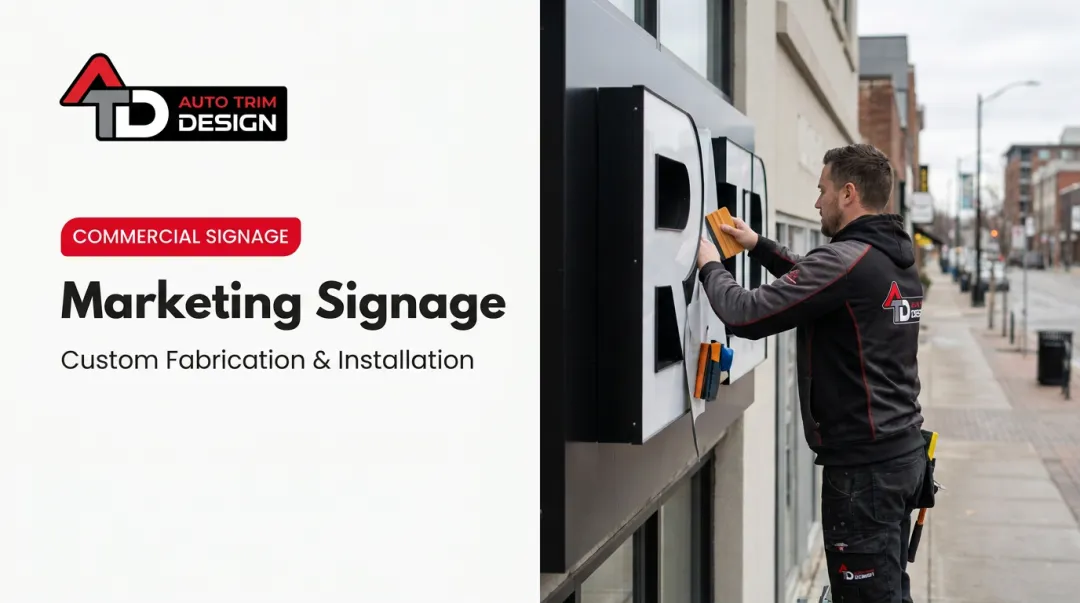
Fascia signs, blade (projecting) signs, window vinyl, and A-frame boards do the heavy lifting before a customer ever steps inside. They announce brand and personality in seconds, often serving as the deciding factor in whether someone walks in at all.
A FedEx Office survey of 1,000 U.S. adults found that 76% had entered a store they'd never visited before based solely on its signage. The same survey found over half were less willing to enter a store with misspelled or poorly made signs, and nearly 60% said no sign at all kept them away entirely.
Translation: your storefront sign isn't just branding. It's a gatekeeper.
Interior and Wayfinding Signage
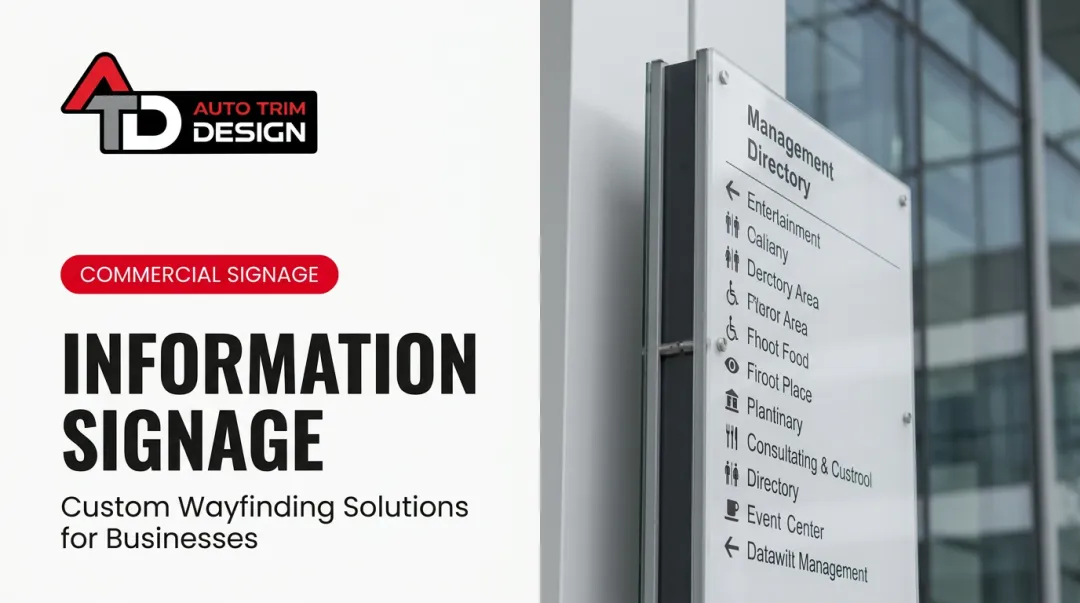
Once inside, aisle signs, department headers, and directional graphics reduce shopper confusion and keep people browsing longer instead of wandering out frustrated. The details matter here:
- Consistent fonts across every department sign
- Matching colour palettes tied to brand guidelines
- Repeated iconography so shoppers learn the visual language quickly
A mismatched wayfinding system, such as one aisle sign in a different font than the next, signals disorganization, even if the products are perfectly merchandised.
Promotional and Point-of-Purchase (POP) Signage
Shelf talkers, end-cap signs, and checkout displays work at the exact moment a purchase decision gets made. These signs highlight limited-time offers, bundle deals, or new product launches right where a shopper's hand is already reaching for the shelf.
POP signage works because it meets shoppers at decision points rather than asking them to remember an ad they saw earlier. Retailers running promotional signs without a clear headline or price call-out often see them ignored entirely. The message needs to be instant, not something shoppers have to decode.
Digital and Interactive Signage
Digital screens and QR codes are bridging the gap between physical stores and online shopping, letting shoppers scan for reviews, check inventory, browse related products, or unlock loyalty offers mid-browse.
This category is growing fast. Retail-focused market research valued the global retail digital-signage market at USD 6.4 billion in 2024, with North America accounting for more than a third of that figure. Retailers who haven't explored digital signage yet are watching a growing slice of the category move without them.

Design Principles That Make Signage Work
The Five-Second Rule and Readability
Shoppers should grasp a sign's message in about five seconds, roughly the time it takes to glance and keep walking. Signs that require a second look usually get skipped entirely.
Practical rules that keep signs readable:
- One main idea per sign: don't cram three messages onto one board
- Short phrases over full sentences
- A clear call-to-action ("Save $10 Today," not "Special Offer Inside")
- Sizing matched to viewing distance: a sign readable from 3 feet won't work from across an aisle
Brand Consistency and Colour Psychology
Consistent colours, fonts, and tone across every sign build shopper trust faster than any single well-designed display can on its own. Shoppers subconsciously associate colour with mood and quality: warm tones can feel inviting, cool tones can feel clinical or premium, depending on the brand story being told.
Pick your brand colours and never deviate from them, whether it's a storefront sign in Concord or an end-cap display in Calgary.
Typography, Contrast, and Placement
Legible type, clear hierarchy (headline, detail, call-to-action), and strong contrast against store lighting all determine whether a sign gets read or ignored.
Placement matters just as much as design. Signs perform best at:
- Eye level, not above sightlines or below waist height
- Entryways, where first impressions form
- End caps and checkout counters, where purchase decisions actually happen
Match sign placement to how shoppers naturally move through the store, and the signage does its job without shoppers even noticing the strategy behind it.
Materials, Durability, and Sustainability in Retail Signage
Material choice determines whether a sign looks sharp for years or starts peeling within months — especially for exterior storefront applications exposed to sun, rain, and temperature swings.
Common options include:
- Cast vinyl films for illuminated signs and window graphics, built for multi-year outdoor durability
- Acrylic for backlit or dimensional signage, valued for clarity and resistance to yellowing
- Printed film and mural-grade substrates for interior walls and large-format graphics
High-traffic retail environments put extra stress on floor graphics, entrance decals, and frequently touched signage, so professional-grade materials aren't optional if a retailer wants to avoid constant reprints.
Choosing durable materials also ties directly to sustainability, since fewer reprints mean less waste. Retailers increasingly want signage materials and production methods that reduce environmental impact, cutting waste costs while meeting environmentally conscious shoppers where they are.
This is where certification and process matter. Auto Trim DESIGN holds 3M Platinum Select Fabricator status, a certification tied to using professional-grade materials and rigorous quality control on every project. The company also published a formal Sustainability Policy Paper in 2025, outlining its commitment to environmental, health, and safety standards across production. Together, these commitments translate into fewer reprints, less waste, and signage that holds up for years of daily wear.

Choosing the Right Retail Signage Partner in Canada
Signage is only as good as the team behind it. For franchise and multi-location retailers, the right partner should offer:
- Full-service delivery: design consultation, production, and installation under one roof, preventing mismatched signage across cities
- Accessibility compliance knowledge: familiarity with provincial standards like Ontario's AODA for signage near accessible entrances, washrooms, and exits
- Proactive planning: flagging code requirements during the design phase, not after installation
Auto Trim DESIGN has operated as a Canada-wide signage, wall mural, and visual branding partner for over 41 years, headquartered in Concord, Ontario, with project experience stretching from Vancouver Island to Newfoundland. The company is a member of the Sign Association of Canada (SAC-ACE), and its portfolio includes work with major brands such as Benjamin Moore and Pizza Hut.
For retailers weighing a single-storefront refresh or a national rebrand, that combination of certification, experience, and coast-to-coast delivery is worth a conversation. Contact Auto Trim DESIGN for a signage consultation.
Frequently Asked Questions
What role do signage and graphics play in a retail store?
Signage guides foot traffic and communicates promotions while reinforcing brand identity at every stage of the shopper journey. It works like a silent staff member, informing and persuading shoppers without a single word spoken.
What is retail graphic design?
Retail graphic design is the creative process of designing signage, displays, and branding materials that align with a store's identity and marketing goals. It turns brand guidelines into physical, in-store visuals shoppers actually see.
What are the main types of retail signage?
The four primary categories are exterior/storefront, interior/wayfinding, promotional/POP, and digital signage. Each serves a different point in the shopper's path, from sidewalk to checkout.
How much does professional retail signage cost in Canada?
Costs vary widely based on size, materials, and order quantity, since a single window graphic differs greatly from a multi-location fleet rollout. Request a custom quote from a signage provider for accurate, project-specific pricing in CAD.
Does retail signage need to comply with accessibility standards in Canada?
Certain signs, such as those for washrooms, exits, and accessible entrances, may need to meet provincial accessibility standards like AODA. Consult a signage professional early in the design process to confirm requirements for your location.
How often should retail signage be updated?
Seasonal and promotional signage should rotate regularly to stay relevant. Brand and wayfinding signage only needs refreshing when materials wear out or the brand identity changes.