
Introduction
Drive through any major Canadian city and you'll spot them: delivery vans, service trucks, and franchise fleets wrapped floor-to-roofline in bold branding. Vinyl wraps have become the default way to turn an ordinary vehicle into a moving billboard.
The global automotive wrap film market reflects this shift, valued at $4.1 billion in 2025 and projected to reach $15.3 billion by 2033, according to a 2025 report by Grand View Research.
But if you're a business owner or fleet manager weighing a wrap, you likely have the same questions: Is it actually cheaper than paint? How long will it hold up in a Canadian winter? Is it worth the investment for a single vehicle or an entire fleet?
This guide breaks down wrap types, real cost comparisons, expected lifespan, DIY versus professional installation, and how to pick an installer you can trust.
Key Takeaways
- Vinyl wraps change a vehicle's colour or add branding without touching factory paint
- Quality wraps last 5 to 7 years, though film grade and panel orientation change that math
- Wrapping typically costs less than a full paint job, especially across a fleet
- 3M Platinum Select Fabricators deliver cleaner, longer-lasting results
What Is a Vinyl Car Wrap?
A vinyl wrap is a thin, adhesive-backed film applied directly over a vehicle's factory paint. It changes colour, texture, or carries printed branding, and it can be removed later without harming a healthy paint surface underneath. This is a different product entirely from paint protection film (PPF), which is a thicker, clear polyurethane made to absorb stone chips and impacts rather than change appearance.
Types of Vinyl Wraps
Not every project needs the same coverage. The three main approaches are:
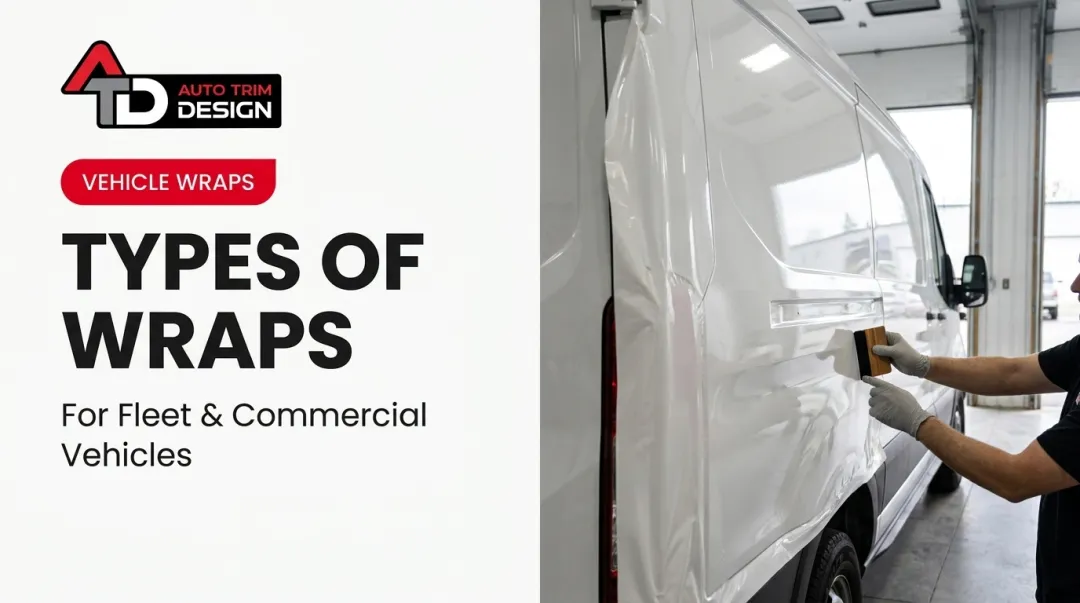
- Full wraps – cover the entire body for a complete colour change or full brand takeover; the standard choice for fleet branding
- Partial wraps – cover select panels like the hood, doors, or tailgate for cost-effective accents or lighter branding
- Printed/graphic wraps – custom-designed, printed vinyl carrying logos, contact information, and imagery, common on commercial vans and trucks

Finishes and Film Quality
Finish options have expanded well beyond gloss. Current choices include matte, satin, chrome, and textured looks like carbon fibre or brushed metal. 3M's 2080 film series alone offers nearly 100 colours, patterns, and textures.
Film construction matters just as much as finish. Cast vinyl films conform tightly around compound curves, mirrors, and door handles, making them the standard for full wraps meant to last years. Calendered vinyl is thicker and holds shape memory, which works well on flat panels for shorter-term graphics but struggles on convex surfaces.
For fleet clients, colour-matching precision across dozens of vehicles depends heavily on the printing equipment's profiling system. This ensures the logo blue on a van in Vancouver matches the one in Halifax.
Key Benefits of Vinyl Wraps for Vehicles and Businesses
Beyond the visual transformation, wraps deliver several practical advantages.
Added paint protection. A wrap acts as a barrier against minor scratches, UV exposure, and road grime on the panels it covers. It's not a substitute for paint protection film (PPF) against rock chips, but on healthy factory paint, it adds a layer of everyday defence.
Mobile advertising without recurring spend. Once installed, a wrapped vehicle keeps advertising every time it's parked or driven, with no monthly media buy. For businesses running vans or trucks daily across a city, that's exposure a billboard lease simply can't match on a per-dollar basis.
Fleet-wide brand consistency. For franchises and logistics companies managing dozens of vehicles, matching Pantone colours precisely across every unit protects brand recognition. This matters more than most owners expect. A slightly off shade of red on one truck out of fifty is the kind of inconsistency customers notice, even subconsciously.
A few more benefits stand out:
- Resale value – removing a wrap later can reveal paint that's been shielded from years of sun and road debris
- Eco-friendlier options – non-PVC films, such as 3M's Envision series, are now available for brands prioritizing lower-impact materials
- Faster turnaround – wrapping a vehicle generally takes far less shop time than a full repaint
Vinyl Wrap vs. Paint: Which Is Cheaper?
This is the question almost every buyer asks first, and the short answer is: wrapping usually wins on cost.
Canadian pricing data from Driving.ca puts professionally applied full wraps starting around $4,000 to $4,500 for small or midsize cars, with SUVs and trucks starting closer to $5,000. A full custom paint job, by comparison, frequently runs higher once labour-intensive prep work, multiple coats, and curing time are factored in.
Why Wraps Cost Less
Several factors drive the price gap:
- Prep time: paint requires sanding, priming, and multiple cure cycles; wraps need surface cleaning and, occasionally, trim removal
- Labour hours: applying film is faster than layering and curing paint coats
- Downtime: a wrap job typically returns a vehicle to service in a day or two, while paint can take a week or more
What Actually Drives Wrap Pricing
Within the wrap category itself, cost still varies based on:
- Vehicle size and body complexity
- Full versus partial coverage
- Film quality (cast versus calendered)
- Trim, mirror, and bumper removal requirements
Those factors apply at the single-vehicle level. Fleet-level economics change the math further, since bulk wrap projects reduce per-vehicle cost compared to painting each unit individually, as design work, material ordering, and installer scheduling all scale efficiently across a large fleet.
Auto Trim DESIGN's Avenir Energy rebrand shows this in practice. The project wrapped roughly 350 vehicles coast to coast to unify several acquired propane companies under one visual identity, staggered across the country without pulling trucks out of active winter service.
How Long Does a Vinyl Wrap Last?
A well-installed, well-maintained wrap typically lasts 5 to 7 years, though the real answer depends on the film and where on the vehicle it sits.
3M's 2080 series, for example, carries warranty coverage of up to 8 years for vertical surfaces like doors and roof panels. Horizontal surfaces such as hoods and roofs facing direct sun get only up to 3 years, according to 3M's product documentation. Horizontal panels simply take more UV punishment.

What Shortens or Extends Lifespan
- UV and climate exposure – vehicles parked outdoors year-round age faster than garaged ones
- Winter extremes – Canadian cold can affect adhesive performance if the film wasn't given time to cure properly after install
- Washing habits – automated brush washes cause premature wear at seams and edges
- Installation quality – bubbles or lifted edges from a rushed job accelerate failure everywhere else
Maintenance Tips That Actually Help
- Hand-wash with pH-neutral soap rather than automated brushes
- Remove bird droppings, tree sap, or tar as soon as you notice them
- Avoid high-pressure washing directly at seams and panel edges
- Let a freshly wrapped vehicle sit at room temperature for at least a day before exposing it to winter cold
DIY vs. Professional Installation
DIY has a place. A small partial wrap, a personal weekend project, or a single accent panel on your own car are reasonable candidates if you have the patience and a few hours to spare.
Business fleets are a different story entirely.
Why professional installation matters for fleets:
- Seamless finishes without bubbling, peeling, or misaligned graphics
- Consistent brand appearance across every single vehicle, not just the first one
- Faster turnaround using trained crews who've done this hundreds of times
- Documented warranty backing that DIY work simply doesn't carry
Certified installers, including 3M Platinum Select Fabricators, follow structured quality control processes covering surface prep, temperature control, and seam planning. That matters most at scale, where one poorly wrapped van in a fleet of fifty undermines the whole brand's polish.
A trained crew also handles the tricky parts, like mirrors, door handles, and compound curves, without the rework costs that come from a first-timer's learning curve.
Choosing the Right Vinyl Wrap Partner for Your Business
Not every wrap shop operates at the same standard, and for a fleet rebrand, the gap between a good installer and a great one shows up fast.
Look for these trust signals:
- Manufacturer certification – status like 3M Platinum Select signals an audited track record and trained installers, not just a shop that buys film off a shelf
- Industry memberships – affiliations with the Sign Association of Canada (SAC-ACE) or the Ontario Sign Association point to a business held to broader industry standards
- End-to-end service – design consultation, precise Pantone colour matching, and installation under one roof reduces the risk of miscommunication between design and execution
Auto Trim DESIGN has operated out of Concord, Ontario since 1984, holding 3M Platinum Select Fabricator status and membership in both SAC-ACE and the Ontario Sign Association.
The company's nationwide capability was tested by the Avenir Energy project: roughly 350 service vehicles wrapped from Vancouver Island to Newfoundland, trucks kept in active winter propane delivery throughout. That kind of coast-to-coast execution, without disrupting daily operations, is the benchmark worth asking any prospective installer whether they can match.

If your business is managing multiple vehicles or planning a rebrand, requesting a consultation is the fastest way to get a realistic quote and timeline.
Frequently Asked Questions
Is it cheaper to paint or wrap a car?
Wrapping is generally more affordable than a full custom paint job, especially for fleets, and it installs faster with less vehicle downtime. It's also fully reversible if you want a different look later.
How long does a wrap last on a car?
Most quality wraps last 5 to 7 years with proper care, though vertical panels often outlast horizontal ones due to sun exposure. Climate, washing habits, and installation quality all play a role.
Does a vinyl wrap damage the original paint underneath?
No. A wrap actually shields paint from minor scratches and UV exposure, and it removes cleanly on healthy factory paint when installed and removed correctly. Pre-existing paint damage, however, can complicate removal.
Can I wrap a leased or financed vehicle?
Most leasing companies allow reversible wraps on leased vehicles, though they don't always publish specific wrap policies. Check with your leasing company beforehand to confirm removal requirements at lease end.
How much does it cost to wrap a fleet of vehicles in Canada?
Fleet pricing varies by vehicle count, size, and design complexity, but bulk projects typically reduce the per-vehicle cost compared to wrapping units individually. A direct consultation with Auto Trim DESIGN gives the most accurate quote for your fleet size and location.
What's the difference between a vinyl wrap and paint protection film (PPF)?
Vinyl wrap is a PVC-based cosmetic film that changes a vehicle's colour and carries branding. PPF is a thicker polyurethane film that primarily absorbs impacts and abrasion rather than changing appearance.